
Diabetic Foot Ulcers From First Sore to Healing
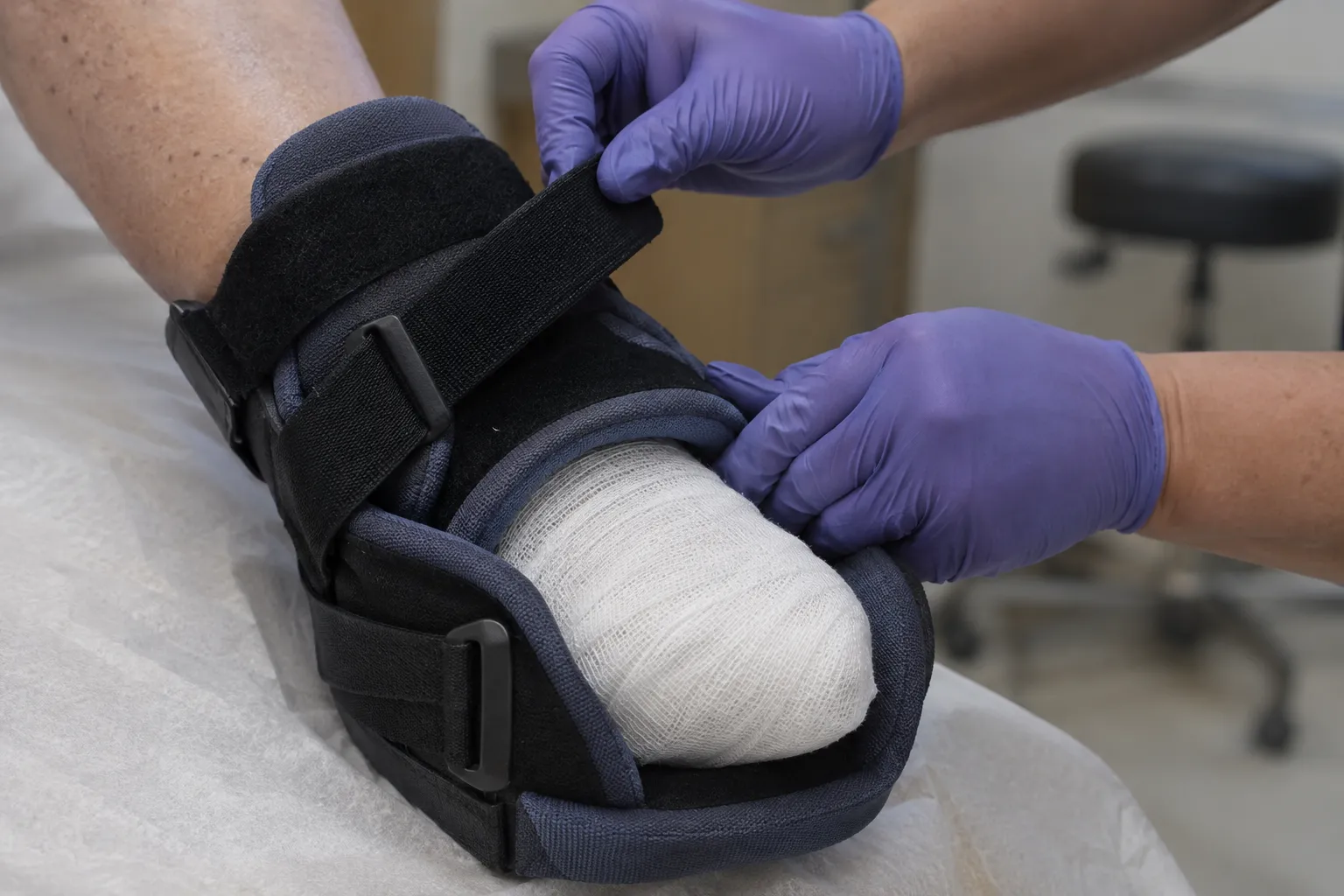
A diabetic foot ulcer starts as something small you can see: an open sore, often on the sole. The question that follows is whether it will close, and what that takes.
APMA describes a diabetic foot ulcer as an open sore or wound that occurs in approximately 15 percent of patients with diabetes and is commonly located on the bottom of the foot. A PubMed Central (NIH) article says diabetic foot ulcers readily become chronic, and that all too often these wounds do not heal primarily.
What makes a sore hard to feel
The nerve side matters here, because a sore you cannot feel is a sore you may not check. The NIDDK page on diabetic neuropathies is the outside read for that part of the story.
The articles, from care to complications
Begin with Dressing and Offloading a Diabetic Wound for the daily work of looking after an open sore. Read Foot Wounds From Blocked Arteries if blood supply is the question. Finish with Charcot Foot and Weakened Foot Bones for the bone-level complication.
Reading the science behind the label
Wound products come with confident packaging. The article from PubMed Central (NIH) on the pathophysiology and treatment of chronic wounds in diabetes mellitus is a better measure of what is documented.
Which sign should not wait
An open sore on the foot is the sign that should not wait for a routine appointment. If you are also noticing a foot that is cold, pale or numb, open Nerve Damage and Blood Flow in the Feet.