
Dressing and Offloading a Diabetic Wound
A dressing from the pharmacy shelf is the first thing most people reach for with a foot wound. It is also only one part of what the documented standard describes.
Cleaning and covering
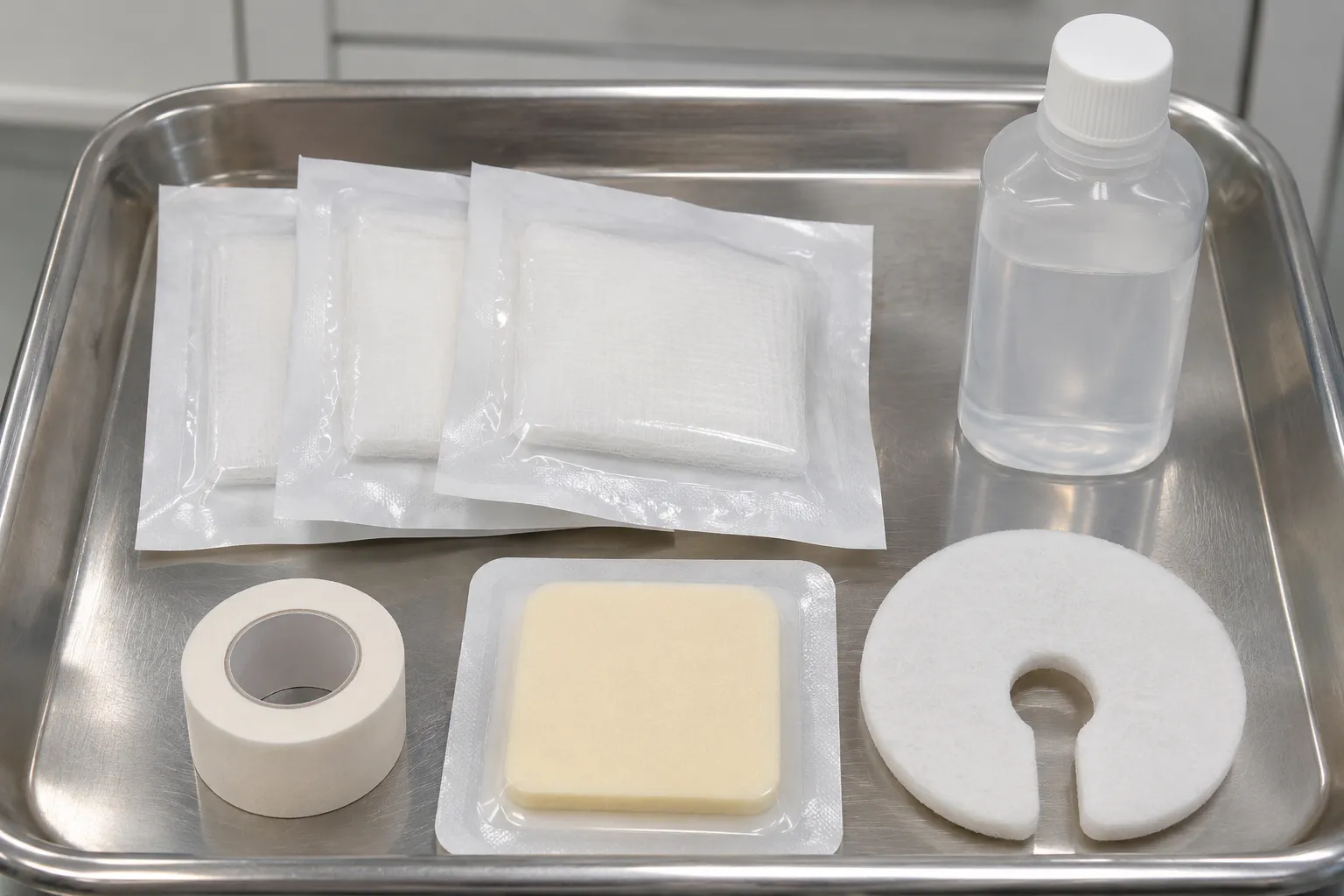
MedlinePlus says to cleanse the wound daily, using a wound dressing or bandage. That is the daily task, and it is plain on purpose.
What standard treatment includes
A PubMed Central (NIH) article states that the standard treatment of diabetic ulcers includes measures to optimize glycemic control, extensive debridement, infection elimination by antibiotic therapy based on wound pathogen cultures, the use of moisture dressings, and offloading high pressure from the wound bed.
Read that list against a product box. The box talks about the dressing. The documented standard puts the dressing among several steps, and it names pressure as one of them.
Why pressure matters
Offloading means taking high pressure off the wound bed. A dressing cannot do that by itself, which is why the PubMed Central (NIH) article sets the two side by side. For the longer science, the article on the pathophysiology and treatment of chronic wounds in diabetes mellitus is worth reading in full.
Feeling in the foot
Whether the foot can feel the wound is part of the picture. The NIDDK page on diabetic neuropathies covers the nerve side, and clinics screen for it, as one paper from PubMed Central (NIH) on monofilament testing at points across the foot shows. Cleveland Clinic's overview of diabetes-related foot conditions gives symptoms and treatment in everyday terms.
The habit and the warning sign
Look at the wound each time you change the dressing and note whether it looks the same, smaller or different. A wound that is still open at the next change, or one that looks worse, needs a clinician. The hub for Diabetic Foot Ulcers From First Sore to Healing maps the full path.